
Land, Belonging, and Exile
Black BoxThe struggle over territory reveals rival ideas of belonging: possession, redemption, coexistence, and the right to remain oneself.
increasing Bearing strength in each event
 decreasing
Bearing strength in each eventdecreasingA Landowner’s Legacy
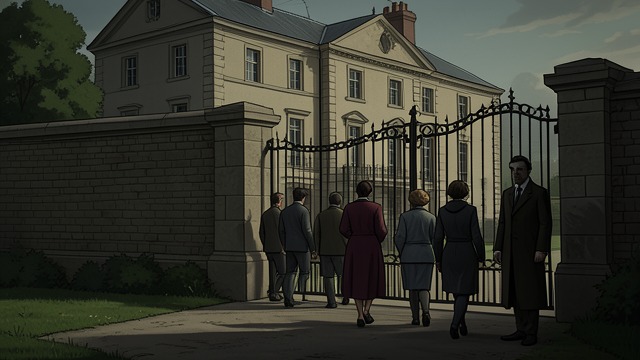
A Landowner’s Legacy
Property and power
Vladimir Gudonski’s estate embodies wealth built through land, labor, and force. Its immense grounds separate the household from surrounding communities.
Inheritance as burden
Alexander receives the property and its history. The estate makes ownership feel less like security than an inherited structure of power and loneliness.
Alkalai House

Alkalai House
Redemption through purchase
Michel seeks money to buy Alkalai House in Hebron, arguing that property lost in violence should be restored through payment. His approach combines law, religion, and political settlement.
The question of consent
The project claims peaceful intent, but its larger goal remains territorial expansion. The novel keeps the moral stakes visible beneath its language of redemption.
Boaz’s Objection
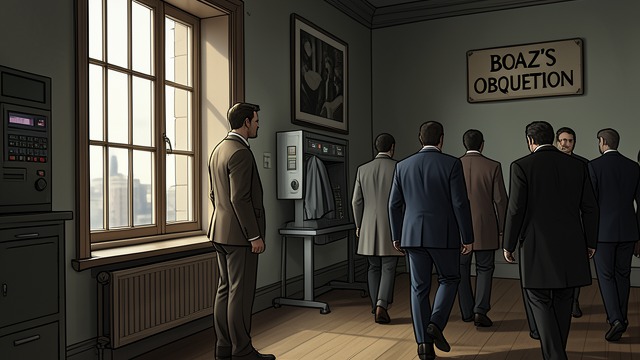
Boaz’s Objection
Against contempt
Boaz objects to talk that demeans Arabs and rejects the idea that belonging to a group makes someone less human. He insists that people should be left to live their own lives.
A counterclaim to ownership
His position challenges both Michel’s religious certainty and Alexander’s political abstractions. It asks whether a land can be loved without treating its inhabitants as obstacles.
The Political Deal

The Political Deal
Land as investment
Zakheim links Michel’s religious movement to property transactions involving Bethlehem and the West Bank. Sacred language and commercial calculation proceed together.
Belonging becomes strategy
The land is described as inheritance, mission, and opportunity. The shifting vocabulary shows how political conviction can convert territory into an instrument of profit and power.
A Productive Estate
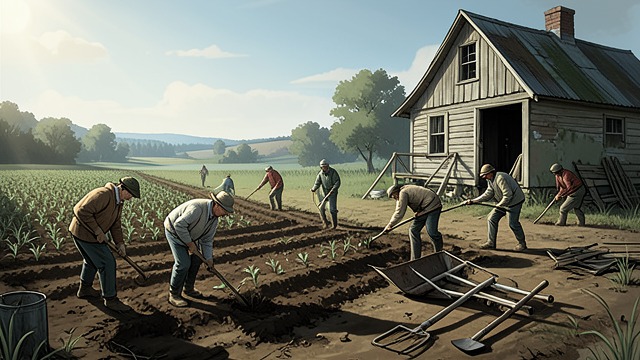
A Productive Estate
Restoration rather than conquest
Boaz and the commune clear the grounds, plant crops, and restore the old estate. The land is made useful through daily labor rather than grand declarations.
A limited belonging
Their work does not resolve competing national claims. It offers a grounded form of attachment based on care for a place and the people who live there.
Before 1968
March 1976
July 1976
July–August 1976
September–October 1976
